
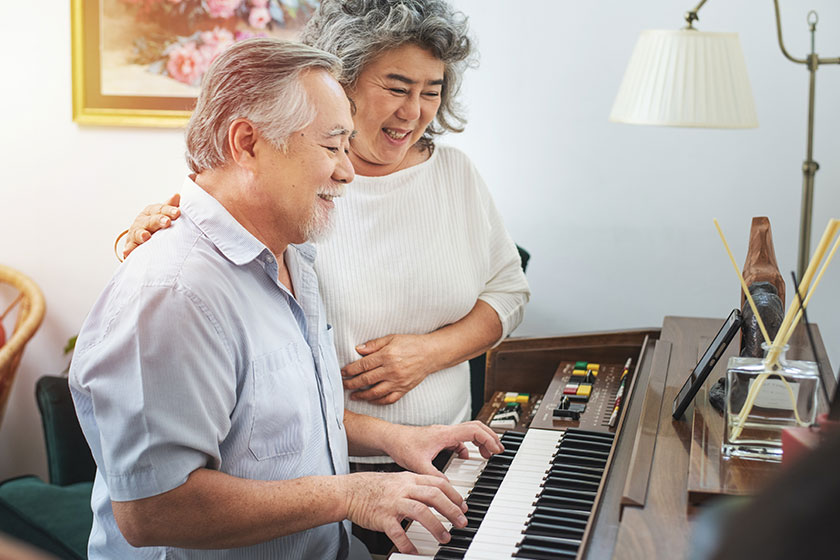
Did you know that something as simple as listening to music could play a powerful role in brain health? A recent study involving more than 10,000 adults aged 70 and older revealed that seniors who regularly listened to music or played an instrument had nearly a 40% lower risk of developing dementia.
This remarkable insight highlights music not just as entertainment — but as a form of cognitive exercise that stimulates multiple parts of the brain simultaneously.

Why Music Matters for Aging Brains
Music engages the brain in a unique way. Whether someone hums along to a favorite tune, taps their foot to a rhythm, or sings a familiar lyric, the brain lights up with activity.
Here are some of the key cognitive benefits linked to music:
-
Boosts memory recall — music often triggers vivid memories and emotional responses
-
Engages multiple brain regions — including auditory, emotional, and motor areas
-
Reduces stress and anxiety — lowering cortisol levels
-
Improves mood — especially in dementia or Alzheimer’s residents
-
Supports social connection — singing together, sharing songs, reminiscing
For many individuals, especially those in senior or memory care communities, music becomes a bridge to moments of clarity, recognition, and emotional expression.
Music as Daily Brain Support
Integrating music into daily life can be simple and enjoyable:
-
Listening to favorite songs
-
Participating in sing-along sessions
-
Playing simple instruments (like tambourines or hand drums)
-
Gentle dancing or rhythmic movement
-
Enjoying live performances when possible
Even short, consistent exposure to music can have a cumulative, positive impact on cognition and emotional well-being.
A Gentle, Powerful Approach to Dementia Prevention
At a time when dementia rates continue to rise globally, this study offers hope and practical guidance. Music is accessible, affordable, and deeply human. Whether through headphones, live sessions, or family-led musical moments, encouraging seniors to connect with music may be one of the easiest ways to support lifelong brain health.